
Choosing the best lithium battery for off-grid solar is one of the most important decisions you’ll make for your homestead. Your battery bank determines how much energy you can store, how long your system lasts, and ultimately whether you can live comfortably off the grid. In 2025, LiFePO4 (lithium iron phosphate) batteries have become the gold standard—offering 10x the cycle life of lead-acid at prices that finally make sense for homesteaders.
This guide ranks the top LiFePO4 batteries by capacity, cycle life, warranty, and real-world value. We also cover sizing basics so you buy the right amount of storage. Already have panels picked out? See our best solar panels for off-grid guide. Need the full picture? Start with our DIY off-grid solar system guide.
Why LiFePO4 for Off-Grid Solar?
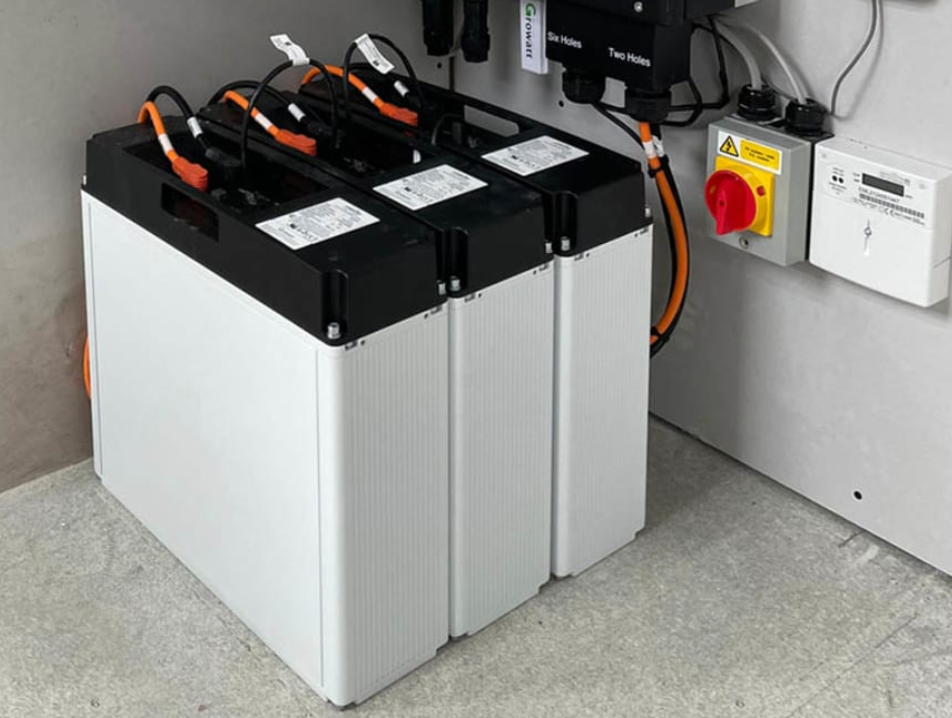
Before diving into our picks, here’s why lithium iron phosphate (LiFePO4) batteries dominate off-grid solar in 2025:
- 4,000–10,000+ cycle life – vs. 500–800 cycles for lead-acid. At one cycle per day, a LiFePO4 battery lasts 10–25+ years.
- 95% usable capacity – Lead-acid should only be discharged to 50%. LiFePO4 safely uses 95–100% of rated capacity.
- No maintenance – No watering, no equalization charges, no acid spills.
- Lighter weight – 50–70% lighter than equivalent lead-acid, making installation easier.
- Built-in BMS – Battery Management Systems protect against overcharge, over-discharge, short circuits, and temperature extremes.
- Safe chemistry – LiFePO4 is thermally stable and doesn’t suffer thermal runaway like other lithium chemistries.
The upfront cost is higher, but the cost per kWh over lifetime is 3–5x cheaper than lead-acid. For off-grid homesteads, LiFePO4 is the clear winner.
Best Lithium Batteries for Off-Grid Solar – 2025 Rankings
1. Battle Born 100Ah 12V LiFePO4 – Best Overall
Battle Born is the most trusted name in off-grid lithium batteries, and for good reason. Their 100Ah 12V battery delivers 1,280Wh of usable energy with a 3,000–5,000 cycle lifespan. The built-in BMS handles overcharge, low-temperature cutoff, and cell balancing automatically.
What sets Battle Born apart is their 10-year warranty and US-based customer support. They’re also the easiest to connect in parallel—up to four units for a 400Ah bank without compatibility issues. Drop-in replacement for Group 27 lead-acid batteries.
Capacity: 100Ah (1,280Wh) | Voltage: 12V
Cycles: 3,000–5,000 | Weight: 31 lbs
Warranty: 10 years
👉 Check Price: Battle Born 100Ah LiFePO4 on Amazon
2. Renogy 200Ah 12V LiFePO4 – Best Value for Large Systems
Renogy’s 200Ah battery packs double the capacity into a single unit, which means fewer connections and lower cost per kWh. The self-heating function activates automatically below 41°F (5°C), making it ideal for cold-climate homesteads where other lithium batteries refuse to charge.
The integrated 200A BMS protects against all fault conditions, and you can parallel up to four units for a massive 800Ah bank. At roughly $0.40/Wh, it’s one of the best values in 2025.
Capacity: 200Ah (2,560Wh) | Voltage: 12V
Cycles: 4,000+ | Weight: 52 lbs
Warranty: 5 years
👉 Check Price: Renogy 200Ah Self-Heating LiFePO4 on Amazon
3. SOK 206Ah 12V LiFePO4 – Best Budget Option
SOK batteries have built a loyal following in the off-grid community for delivering premium specs at budget prices. The 206Ah model uses Grade A prismatic cells with a 200A continuous BMS. At under $500 for 200+ Ah, the cost per kWh is hard to beat.
SOK batteries support Bluetooth monitoring via a smartphone app, letting you check state of charge, voltage, and temperature from inside your cabin. Parallel up to four batteries.
Capacity: 206Ah (2,637Wh) | Voltage: 12V
Cycles: 4,000+ | Weight: 46 lbs
Warranty: 5 years (limited)
👉 Check Price: SOK 206Ah LiFePO4 on Amazon
4. EG4 LifePower4 48V 100Ah Server Rack Battery – Best for 48V Systems
If you’re building a 48V off-grid system (which we recommend for larger homesteads), the EG4 LifePower4 is the go-to. This server-rack-style battery packs 5,120Wh into a single unit with a 100A BMS. It communicates via CAN bus with popular inverters like the EG4 18KPV and Sol-Ark, enabling intelligent charge management.
The rack-mount form factor keeps your battery bank organized and professional. Stack up to 16 units in parallel for massive 80+ kWh systems.
Capacity: 100Ah (5,120Wh) | Voltage: 48V
Cycles: 7,000+ | Weight: 100 lbs
Warranty: 10 years
👉 Check Price: EG4 LifePower4 48V on Amazon
5. Ampere Time 300Ah 12V LiFePO4 – Best High-Capacity Single Unit
Ampere Time (LiTime) offers one of the highest single-unit capacities at 300Ah (3,840Wh). For small cabins or RV off-grid setups, a single 300Ah battery might be all you need. The built-in 200A BMS and low-temperature charging cutoff protect the cells in all conditions.
At 300Ah, you get enough storage to run LED lights, a 12V fridge, phone charging, and a laptop through an entire night on a single charge.
Capacity: 300Ah (3,840Wh) | Voltage: 12V
Cycles: 4,000+ | Weight: 61 lbs
Warranty: 5 years
👉 Check Price: Ampere Time 300Ah LiFePO4 on Amazon
How to Size Your Off-Grid Battery Bank

Getting the right battery capacity is crucial. Here’s a quick sizing formula:
- Calculate daily energy use – Add up all appliance watt-hours per day. A typical off-grid cabin uses 3–8 kWh/day.
- Days of autonomy – Plan for 2–3 days without sun (cloudy weather buffer).
- Depth of discharge – LiFePO4 allows 95%, but plan for 80% to maximize lifespan.
- Formula: Battery bank (Wh) = Daily use × Days of autonomy ÷ Depth of discharge
Example: 5 kWh/day × 2 days ÷ 0.80 = 12,500 Wh = 12.5 kWh battery bank
That’s roughly five 200Ah 12V batteries (12,800 Wh) or three EG4 48V units (15,360 Wh). When in doubt, size up—you can always use extra capacity, but you can’t create it during a three-day storm.
For complete system design, check our DIY off-grid solar system guide which covers panels, charge controllers, inverters, and wiring alongside battery selection.
LiFePO4 vs Lead-Acid for Off-Grid Solar – Cost Comparison
| Metric | LiFePO4 (200Ah) | Lead-Acid AGM (200Ah) |
|---|---|---|
| Usable capacity | 190Ah (95%) | 100Ah (50%) |
| Cycle life | 4,000+ | 500–800 |
| Lifespan (daily cycling) | 10–15 years | 2–3 years |
| Upfront cost | ~$500 | ~$350 |
| Lifetime cost (per kWh) | ~$0.05 | ~$0.25 |
| Weight | ~50 lbs | ~130 lbs |
| Maintenance | None | Water, equalization |
Over 10 years, a lead-acid system costs 5x more because you’ll replace the batteries 3–5 times. LiFePO4 wins on every metric except initial purchase price.
Installation Tips for LiFePO4 Off-Grid Batteries
- Use properly sized cables – 2/0 AWG or 4/0 AWG for 12V systems over 200A. Undersized cables cause voltage drop and heat.
- Install a DC disconnect – Safety requirement. Place between battery bank and inverter/charge controller.
- Fuse each battery – Use a Class T or ANL fuse rated to the BMS maximum on each parallel string.
- Ventilation – LiFePO4 doesn’t off-gas like lead-acid, but maintain airflow for BMS cooling.
- Charge controller compatibility – Set your MPPT charge controller to LiFePO4 profile: 14.2–14.6V absorption, 13.6V float (for 12V systems).
- Temperature monitoring – Install a battery temperature sensor on the BMS. Most LiFePO4 batteries won’t charge below 32°F (0°C) without self-heating.
👉 Check Price: 4/0 AWG Battery Cable Kit on Amazon
Battery Monitoring & Accessories
Track your battery bank’s health with these essential accessories:
👉 Check Price: Victron SmartShunt Battery Monitor on Amazon
👉 Check Price: JNGE 200A Battery Disconnect Switch on Amazon

Frequently Asked Questions
What is the best lithium battery for off-grid solar in 2025?
The Battle Born 100Ah LiFePO4 is the best overall choice for its 10-year warranty, proven reliability, and easy parallel connectivity. For budget builds, the SOK 206Ah offers more capacity per dollar. For 48V systems, the EG4 LifePower4 is the top pick.
How long do LiFePO4 batteries last in off-grid solar?
LiFePO4 batteries typically last 10–15+ years in daily cycling applications. Most are rated for 4,000–7,000 cycles at 80% depth of discharge. At one cycle per day, that’s 11–19 years of service before reaching 80% of original capacity.
How many lithium batteries do I need for off-grid living?
It depends on your daily energy consumption. A small cabin using 3 kWh/day needs roughly 6–8 kWh of battery storage (two 200Ah 12V batteries). A full-size off-grid home using 8–10 kWh/day needs 20–25 kWh (four to five 200Ah 12V batteries or equivalent 48V units). Always plan for 2–3 days of autonomy.
Can I use LiFePO4 batteries in cold climates?
LiFePO4 batteries can discharge in cold temperatures but most cannot charge below 32°F (0°C) without damage. Choose batteries with built-in self-heating (like the Renogy 200Ah) or install your battery bank in an insulated enclosure. Battery temperature sensors are essential for cold-climate installations.
Is it better to build a 12V or 48V off-grid battery bank?
For systems under 3 kW, 12V is simpler and cheaper. For systems 3 kW and above, 48V is recommended because it requires thinner cables, produces less heat, and is more efficient. Most modern off-grid inverters (like the EG4 18KPV or Sol-Ark 15K) are designed for 48V battery banks.
Disclosure: This article contains Amazon affiliate links. We may earn a commission at no extra cost to you if you purchase through our links. All recommendations are based on thorough research and real-world off-grid experience.
Comments
One response to “Best Lithium Batteries for Off-Grid Solar in 2025 – LiFePO4 Ranked”
[…] to the best components. Already know your numbers? Jump to our best solar panels for off-grid or best lithium batteries for off-grid solar guides to start […]