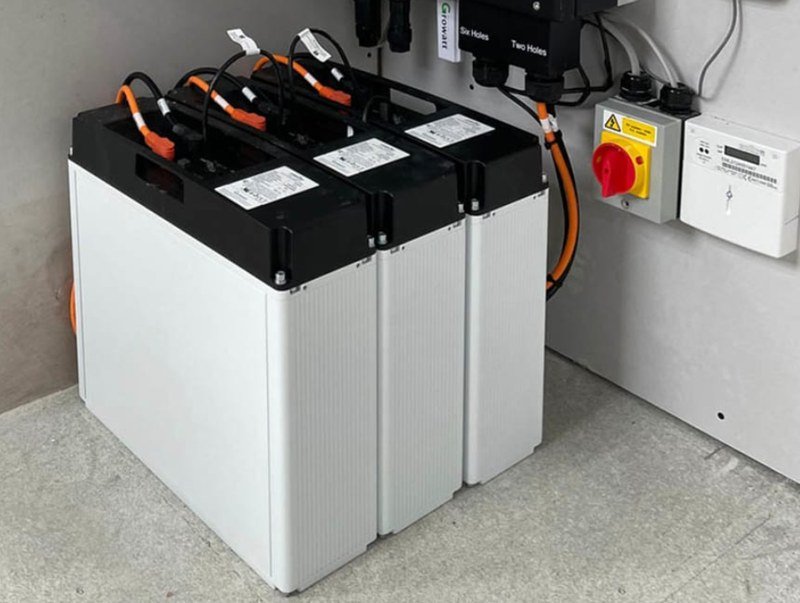
Choosing the right solar battery for homesteading is arguably the most important decision in your entire off-grid power system. Your solar panels might grab the headlines, but it’s the battery bank that determines whether your lights stay on after dark, whether your freezer keeps running during a three-day storm, and whether your homestead achieves true energy independence. In this comprehensive 2025 guide, we break down everything you need to know — from battery chemistry and sizing to lifespan, safety, and our top recommendations.
Why Solar Batteries Are the Heart of Off-Grid Homesteading
Solar panels generate electricity only during daylight hours — roughly 4 to 6 peak hours per day depending on your location and season. Without battery storage, every watt produced after your immediate needs are met simply goes to waste. Come sunset, you’re in the dark.
A properly sized battery bank changes everything. It captures surplus daytime energy and releases it on your schedule — powering lights through the evening, keeping the refrigerator humming overnight, running the well pump at dawn before the panels wake up, and providing a critical reserve during extended cloudy periods.
For homesteaders, battery storage isn’t a luxury — it’s the difference between a solar experiment and a genuine off-grid lifestyle. The battery bank is what transforms intermittent solar generation into reliable, round-the-clock household power.

Understanding Solar Battery Chemistry: LiFePO4 vs Lithium-Ion vs Lead-Acid
Not all batteries are created equal. The three main chemistries available for homestead solar storage each have distinct advantages and trade-offs.
LiFePO4 (Lithium Iron Phosphate) — The Gold Standard
LiFePO4 is the undisputed champion for off-grid homesteading in 2025. Here’s why serious homesteaders choose it:
- Cycle life: 4,000–6,000 full charge/discharge cycles — that’s 10 to 15 years of daily use
- Depth of discharge: Safely use 80–100% of rated capacity without damage
- Safety: Chemically stable — no thermal runaway, no fire risk, no toxic off-gassing
- Efficiency: 95–98% round-trip efficiency means almost no energy wasted in storage
- Temperature tolerance: Performs well from -4°F to 140°F (-20°C to 60°C)
- Weight: 50–60% lighter than equivalent lead-acid batteries
- Maintenance: Zero — no watering, no equalization charging, no terminal corrosion
The only downside is higher upfront cost — typically 2–3× more than lead-acid per kWh. But when you factor in lifespan and usable capacity, LiFePO4 is actually cheaper per cycle over its lifetime.
Standard Lithium-Ion (NMC/NCA)
Standard lithium-ion batteries (the same chemistry in laptops and phones) offer good energy density at moderate cost. However, they have significant drawbacks for homesteading:
- Cycle life: 500–1,000 cycles — only 2 to 3 years of daily cycling
- Safety: Higher thermal runaway risk than LiFePO4 — requires active cooling and battery management
- Depth of discharge: Recommended to stay above 20% charge for longevity
- Best for: Portable backup units and occasional-use systems, not primary homestead storage
Lead-Acid (AGM and Flooded)
Lead-acid batteries are the legacy option — cheap upfront but expensive long-term:
- Cycle life: 300–800 cycles depending on depth of discharge
- Depth of discharge: Only 50% recommended — a 200Ah battery gives you just 100Ah of usable power
- Maintenance: Flooded types need monthly watering and equalization. AGM is maintenance-free but shorter-lived.
- Weight: Extremely heavy — a 5kWh lead-acid bank weighs 300+ lbs
- Lifespan: 2–5 years in daily cycling applications
Our verdict: For any homestead planning to rely on solar long-term, LiFePO4 is the only chemistry worth investing in. The upfront premium pays back within 3–4 years through longer lifespan and zero maintenance.

How to Size a Solar Battery Bank for Your Homestead
Undersizing your battery bank leads to constant low-charge stress (which kills batteries faster), while oversizing wastes money. Here’s the systematic approach to getting it right:
Step 1: Calculate Your Daily Energy Consumption
List every electrical device on your homestead and estimate daily usage:
- LED lighting (10 bulbs × 10W × 5 hours) = 500Wh
- Refrigerator (100W average × 24 hours) = 2,400Wh
- Well pump (750W × 1 hour) = 750Wh
- Laptops and phones (100W × 4 hours) = 400Wh
- Miscellaneous (fans, router, chargers) = 300Wh
Example total: 4,350Wh per day
Step 2: Determine Days of Autonomy
How many cloudy days do you need to ride through without solar input? For most homesteads, 2–3 days of autonomy is the sweet spot. Multiply your daily consumption by your autonomy target: 4,350Wh × 2 days = 8,700Wh minimum storage.
Step 3: Account for Depth of Discharge
For LiFePO4, you can safely use 90% of capacity: 8,700Wh ÷ 0.9 = 9,667Wh. For lead-acid at 50% DoD: 8,700Wh ÷ 0.5 = 17,400Wh — nearly double the rated capacity needed.
Step 4: Add Efficiency Buffer
Add 10–15% for inverter losses and wiring inefficiency: 9,667Wh × 1.1 = ~10,600Wh or roughly 10.6kWh of LiFePO4 storage.
Our Top Pick: EcoFlow DELTA 2 Portable Power Station
For homesteaders who want a plug-and-play battery solution without wiring a custom bank, the EcoFlow DELTA 2 is our top recommendation. It combines a 1,024Wh LiFePO4 battery with a built-in 1,800W pure sine wave inverter, MPPT charge controller, and 15 output ports — everything in one box.
Key advantages for homesteaders:
- Expandable: Add a DELTA 2 Extra Battery for 2,048Wh total
- Fast solar charging: Up to 500W solar input via MPPT — full charge in 3 hours with adequate panels
- App monitoring: Track charge level, solar input, and power draw from your phone
- 3,000+ cycle LiFePO4: 10+ years of daily use
- Silent operation: No generator noise disturbing your homestead peace

Solar Battery Maintenance and Safety Tips
Even low-maintenance LiFePO4 batteries benefit from proper care:
- Temperature control: Install batteries in a climate-controlled space — extreme heat accelerates degradation, extreme cold reduces output. A insulated battery box in a shed or garage works well.
- Proper ventilation: While LiFePO4 doesn’t off-gas like lead-acid, adequate airflow prevents heat buildup during heavy charge/discharge cycles.
- Correct charging parameters: Use a charge controller with LiFePO4-specific settings. Overcharging lithium batteries is the fastest way to reduce lifespan.
- Monitor state of charge: Avoid storing batteries below 10% for extended periods. Most BMS (Battery Management Systems) will shut down at 5% to protect the cells.
- Use appropriate wire gauge: Undersized cables cause voltage drop and heat buildup. Follow AWG charts for your system’s amperage.
- Annual inspection: Check terminal connections for tightness and corrosion. Loose connections waste energy and create fire hazards.
- Keep it clean and dry: Dust and moisture are enemies of electronics. Wipe battery terminals and enclosures quarterly.
Common Battery Sizing Mistakes Homesteaders Make
Avoid these costly errors when building your battery bank:
- Using car batteries: Automotive starter batteries are designed for short high-current bursts, not deep cycling. They’ll fail within months in a solar application.
- Mixing old and new batteries: Adding new batteries to an old bank drags the new ones down to the weakest cell’s performance. Always replace the entire bank at once.
- Ignoring temperature derating: Battery capacity drops 10–20% in cold weather. Size your bank for winter performance, not summer peak.
- Skipping the BMS: A Battery Management System prevents overcharge, over-discharge, and cell imbalance. Never run lithium batteries without one (all quality units include built-in BMS).
- Undersizing for surge loads: Well pumps and power tools draw 2–3× their running watts on startup. Your battery bank’s discharge rate must handle these surges.
Frequently Asked Questions
How long do solar batteries last for homesteading?
LiFePO4 batteries last 4,000–6,000 charge cycles, translating to 10–15 years of daily use. Standard lithium-ion lasts 500–1,000 cycles (2–3 years). Lead-acid lasts 300–800 cycles (1–3 years). For homesteading, LiFePO4 is the only chemistry that delivers true long-term value.
What size solar battery bank do I need for a homestead?
Calculate your daily energy use in watt-hours, multiply by your desired days of autonomy (2–3 recommended), divide by depth of discharge (0.9 for LiFePO4), and add 10% for efficiency losses. A typical small homestead needs 5–10kWh; a full homestead needs 10–20kWh.
Can I use a portable power station as my homestead battery?
Yes — units like the EcoFlow DELTA 2 combine battery, inverter, and charge controller in one portable package. They’re ideal for small to medium homesteads or as backup to a larger fixed system. For whole-home power, you may need multiple units or a dedicated battery bank.
Is it worth buying LiFePO4 over lead-acid for solar storage?
Absolutely. While LiFePO4 costs 2–3× more upfront, it lasts 5–10× longer, uses 80–100% of capacity vs 50% for lead-acid, weighs half as much, and requires zero maintenance. Cost per cycle over its lifetime is actually lower than lead-acid.
How do I protect my solar batteries from cold weather?
Install batteries in an insulated enclosure — a simple plywood box with rigid foam insulation works well. For extreme cold below 0°F, add a thermostatically controlled heating pad. Most LiFePO4 batteries include low-temperature charging protection that prevents damage from charging below freezing.