
Choosing the best solar panels for off-grid living is one of the most important decisions you’ll make as a homesteader or off-grid enthusiast. The right solar panel system means reliable power for years — lighting, refrigeration, water pumping, and charging — without utility bills or grid dependency. The wrong choice means undersized output, poor durability in weather, and expensive replacements. This guide covers the best solar panels for off-grid living in 2025: what to look for, how to size your system, and which panels and supporting gear deliver the best long-term value for homesteaders, cabin owners, and remote property dwellers.
What Makes the Best Solar Panel for Off-Grid Living?
Not all solar panels are equal — and off-grid use has different priorities than grid-tied systems. Here’s what matters most:
- Efficiency: Higher efficiency (20–23%) means more power per square foot of panel. Critical when roof or ground space is limited.
- Durability: Off-grid panels face harsh conditions — snow loads, hail, wind, and temperature extremes. Look for IP68 ratings and tempered glass.
- Output Wattage: Panels range from 100W (portable) to 400W+ (residential). Most off-grid homesteads need 1,000–5,000W of total panel capacity.
- Temperature Coefficient: Panels lose efficiency in high heat. A lower temperature coefficient (e.g. -0.29%/°C) means better performance in summer.
- Warranty: Best panels carry 25-year power output warranties and 10–12 year product warranties. Avoid anything less.
- Type: Monocrystalline panels are the gold standard for off-grid — higher efficiency and better low-light performance than polycrystalline.
Best Solar Panels for Off-Grid Living in 2025 – Top Systems Ranked

1. Renogy 400W Monocrystalline Solar Panel – Best Overall Off-Grid Panel
Renogy is the most trusted name in off-grid solar, and their 400W monocrystalline panel is the flagship product that earns that reputation. At 21.2% efficiency with a -0.35%/°C temperature coefficient, it delivers consistent output even on partly cloudy days. The reinforced tempered glass handles snow loads up to 5,400 Pa and wind resistance up to 2,400 Pa. The 25-year power output warranty gives genuine long-term confidence.
For most off-grid homesteads, 4–8 of these panels (1,600–3,200W) paired with a proper battery bank covers basic to moderate daily energy needs. Renogy’s ecosystem of compatible charge controllers, inverters, and monitoring gear makes them the natural choice for a cohesive system.
✅ Pros:
- 21.2% efficiency — best-in-class for the price
- Exceptional weather resistance (IP68 rated junction box)
- 25-year power warranty, 10-year product warranty
- Pre-drilled holes for easy mounting
- Compatible with all MPPT charge controllers
❌ Cons:
- Large panel size requires sturdy mounting structure
- Premium price per panel vs budget polycrystalline options
2. EcoFlow 400W Rigid Solar Panel – Best Premium Off-Grid Panel
EcoFlow’s 400W rigid panel pushes efficiency to 23% using high-purity monocrystalline silicon — among the highest available in residential-scale panels. At that efficiency level, you generate significantly more power per square foot than standard panels, which matters enormously when space is limited (cabin roof, RV, small ground array). The panel integrates seamlessly with EcoFlow’s DELTA Pro power station ecosystem, making it the top choice for EcoFlow users building a modular off-grid system.
✅ Pros:
- 23% efficiency — top-tier power density
- Outstanding build quality and weather resistance
- Seamless EcoFlow ecosystem integration
- 5-year product warranty, 25-year performance warranty
❌ Cons:
- Premium price point
- Best value when used with EcoFlow power stations
3. Jackery SolarSaga 200W – Best Portable Off-Grid Solar Panel
For homesteaders, campers, or off-grid users who need portable power, the Jackery SolarSaga 200W is the gold standard. Foldable, lightweight, and capable of 200W output, it pairs perfectly with Jackery Explorer power stations for a complete portable solar system. The 24.3% cell efficiency is exceptional for a portable panel, and the IP67 dust and water resistance means it handles outdoor conditions reliably.
✅ Pros:
- Foldable and portable — set up anywhere in minutes
- 24.3% cell efficiency — impressive for portable format
- IP67 weather resistance
- Perfect companion to Jackery Explorer power stations
❌ Cons:
- Higher cost per watt than fixed panels
- 200W max — need multiple units for homestead-scale needs
Essential Off-Grid Solar System Components
Solar panels are only one piece of a complete off-grid system. Here are the critical supporting components:
Best MPPT Charge Controller for Off-Grid Solar
Renogy Rover 40A MPPT Solar Charge Controller — MPPT controllers extract 10–30% more power from your panels than older PWM technology by continuously optimizing the electrical load. The Renogy Rover 40A handles up to 1,000W of solar input (12V) or 2,000W (24V), supports lithium and AGM battery profiles, and includes a Bluetooth monitoring module. It’s the most reliable mid-range MPPT controller for homestead systems.
Best Solar Generator for Off-Grid Homesteading
EcoFlow DELTA Pro Portable Power Station (3,600Wh) — The EcoFlow DELTA Pro is the most capable solar generator available for serious off-grid use. Its 3,600Wh base capacity expands to 25kWh with extra batteries, the 3,600W AC output runs almost any appliance, and it charges from 0–80% in just 1.8 hours via solar + AC combined. For homesteaders who want a modular, expandable system without a permanent installation, this is the ultimate solution.
Best LiFePO4 Battery for Off-Grid Solar Storage
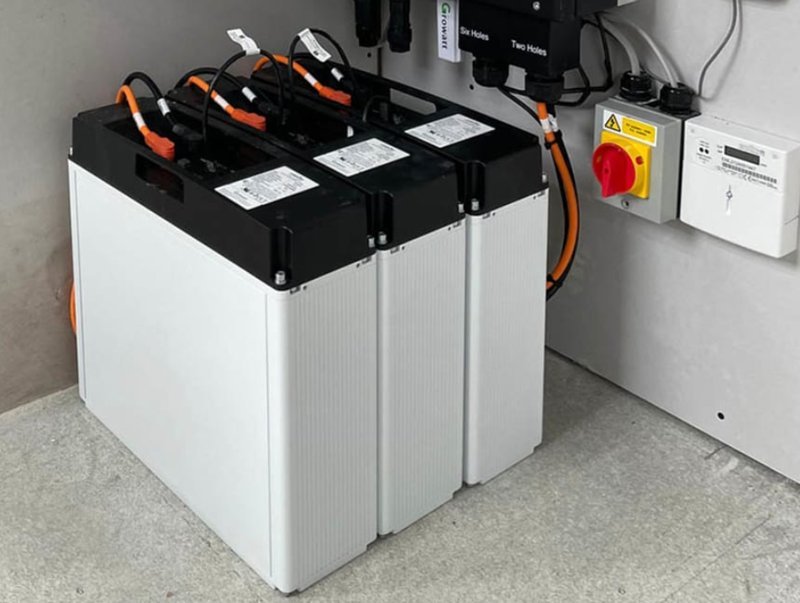
Renogy 200Ah 12V LiFePO4 Lithium Battery — LiFePO4 (lithium iron phosphate) batteries are the modern standard for off-grid solar storage, offering 4,000+ charge cycles (10+ years), 100% usable depth of discharge (vs. 50% for lead-acid), and built-in BMS protection. Renogy’s 200Ah unit delivers 2,400Wh of usable storage and works with any 12V charge controller. For serious off-grid storage, 2–4 of these units gives you 4,800–9,600Wh — enough for a full day of off-grid living.
How to Size Your Off-Grid Solar System
Sizing is where most beginners go wrong. Here’s a simplified framework:
- Calculate daily energy use (Wh): List every appliance you’ll run. Multiply watts × hours per day. Example: Refrigerator (100W × 24h = 2,400Wh) + Lighting (50W × 5h = 250Wh) + Phone/laptop charging (60W × 3h = 180Wh) = 2,830Wh/day.
- Account for inefficiency: Multiply by 1.25 to account for system losses (wiring, inverter, charge controller). 2,830 × 1.25 = 3,537Wh needed from panels daily.
- Divide by peak sun hours: Most US locations get 4–6 peak sun hours. At 5 hours: 3,537 ÷ 5 = 707W of panel capacity needed minimum. Round up — 800–1,000W gives headroom for cloudy days.
- Size your battery bank: Store 1.5–2 days of energy for cloudy day backup. 3,537Wh × 2 days = 7,074Wh. With LiFePO4 at 100% DoD: four 200Ah/12V batteries (9,600Wh) is ideal.

Best Solar Panels for Off-Grid Living – FAQ
What size solar panel system do I need for off-grid living?
Most off-grid homesteads need between 1,000W and 5,000W of solar panel capacity depending on energy consumption. A basic cabin (lights, refrigerator, phone charging, small appliances) typically needs 1,500–2,000W of panels with a 10–20kWh battery bank. A full homestead with well pump, washing machine, and power tools needs 3,000–5,000W+ of capacity.
Are monocrystalline solar panels worth the extra cost for off-grid?
Yes — for off-grid living, monocrystalline panels are almost always worth the premium. Their higher efficiency (20–23% vs 15–17% for polycrystalline) means you get more power from the same roof or ground space, they perform better in low-light and cloudy conditions, and they last longer. The additional upfront cost pays back quickly in better performance over a 25-year panel lifespan.
How many solar panels do I need to power a cabin off-grid?
A typical small off-grid cabin (400–800 sq ft) with basic appliances needs 4–8 panels of 300–400W each (1,200–3,200W total). Pair this with a 5,000–10,000Wh LiFePO4 battery bank and a quality MPPT charge controller. Use a solar sizing calculator with your specific appliance list for the most accurate estimate.
What’s the difference between off-grid and grid-tied solar systems?
Off-grid solar systems are completely independent of the utility grid — they require battery storage to provide power when the sun isn’t shining. Grid-tied systems feed excess power back to the grid and draw from it at night, requiring no batteries. For true energy independence and remote properties without grid access, off-grid is the only option. For properties with grid access, a hybrid system (grid-tied with battery backup) offers the best of both worlds.
How long do off-grid solar panels last?
Quality monocrystalline solar panels from reputable manufacturers like Renogy, EcoFlow, and SunPower carry 25-year power output warranties, guaranteeing at least 80% of rated power at 25 years. Real-world lifespans are often 30–35 years with minimal maintenance. The panels themselves usually outlast the inverter and batteries, which typically need replacement at 10–15 years.
Final Verdict – Best Solar Panels for Off-Grid Living in 2025
The best solar panels for off-grid living in 2025 deliver high efficiency, proven durability, and long warranties that protect your investment for decades. Our top picks:
- 🥇 Renogy 400W Monocrystalline — Best overall value for fixed off-grid installations
- 🥈 EcoFlow 400W Rigid Panel — Best premium efficiency for space-constrained setups
- 🥉 Jackery SolarSaga 200W — Best portable option for flexible off-grid power
Build your system around quality components, size generously for cloudy days, and invest in LiFePO4 storage for the best long-term off-grid experience. For more guides on off-grid solar systems, battery banks, inverters, and homestead power setups, explore SolarHomesteadPro.com.
Comments
One response to “Best Solar Panels for Off-Grid Living in 2025 – Top Home Systems Ranked”
[…] in winter. Together, they reduce battery bank size needed and improve reliability from 60% to 90%+. Check our solar panels guide for complementary […]