
Off-grid solar system sizing is the single most important step before buying a single panel or battery. Get it wrong and you’ll either overspend on equipment you don’t need or—worse—run out of power on a cloudy winter week. This guide walks you through exactly how to size your solar panels, battery bank, charge controller, and inverter for reliable off-grid living in 2025.
Whether you’re powering a remote cabin, a full-size homestead, or a tiny home, the math is the same. We’ll show you the formulas, give you real-world examples, and link to the best components. Already know your numbers? Jump to our best solar panels for off-grid or best lithium batteries for off-grid solar guides to start shopping.
Why Off-Grid Solar System Sizing Matters
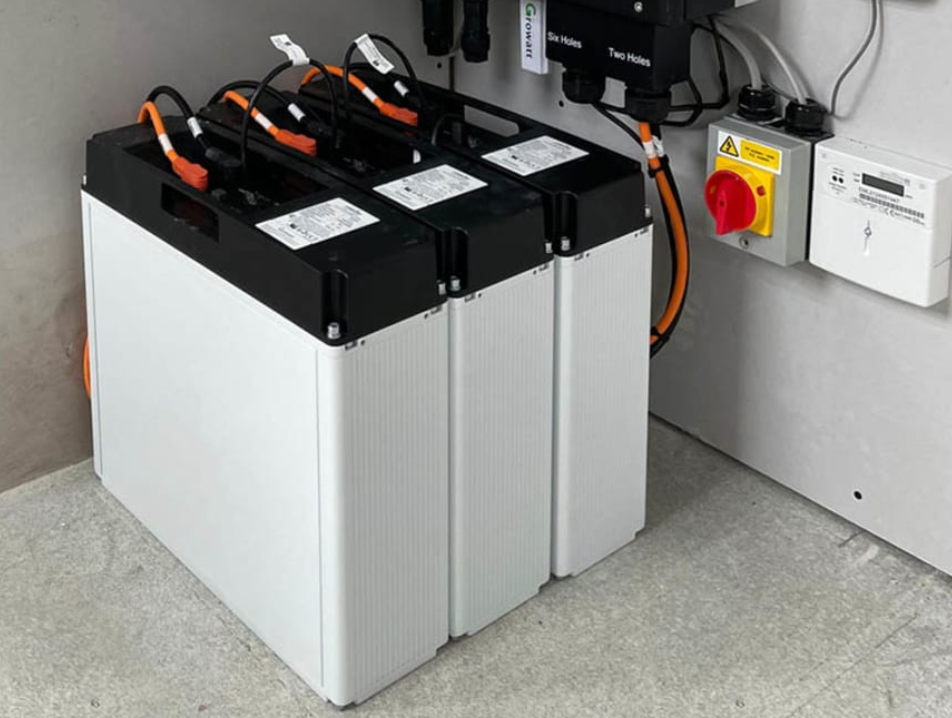
Every off-grid solar system has four core components that must be balanced: solar panels (generation), batteries (storage), a charge controller (regulation), and an inverter (conversion). Sizing means calculating the right capacity for each based on your actual energy needs and local sun conditions.
Here’s what happens when sizing goes wrong:
- Undersized panels → batteries never fully charge, especially in winter. System degrades faster.
- Undersized batteries → you run out of power overnight or during cloudy stretches. Appliances shut off.
- Oversized system → wasted money on panels and batteries sitting at 100% with nowhere to send excess power.
- Mismatched charge controller → clipping solar input, wasting generation capacity you paid for.
Proper off-grid solar system sizing prevents all of these problems. Let’s walk through it step by step.
Step 1: Calculate Your Daily Energy Consumption
The foundation of solar sizing is knowing exactly how much energy you use per day, measured in watt-hours (Wh) or kilowatt-hours (kWh).
For each appliance, multiply its wattage by hours of daily use:
Daily Wh = Watts × Hours per day
Here’s a typical off-grid cabin load calculation:
| Appliance | Watts | Hours/Day | Daily Wh |
|---|---|---|---|
| LED Lighting (5 bulbs) | 50 | 6 | 300 |
| Refrigerator (DC efficient) | 60 | 12 | 720 |
| Laptop | 65 | 4 | 260 |
| Phone charging (2 phones) | 20 | 3 | 60 |
| WiFi router | 12 | 24 | 288 |
| Ceiling fan | 75 | 8 | 600 |
| Water pump | 150 | 1 | 150 |
| Washing machine | 500 | 0.5 | 250 |
| TOTAL | 2,628 Wh |
This cabin uses roughly 2.6 kWh/day—a modest but comfortable off-grid setup. A larger homestead with AC, power tools, and electric cooking might use 8–15 kWh/day.
Pro tip: Use a kill-a-watt meter to measure actual consumption rather than guessing. Nameplate wattage is often higher than real-world draw.
👉 Check Price: Kill A Watt Electricity Usage Monitor on Amazon
Step 2: Size Your Solar Panel Array

Now that you know your daily consumption, calculate how many solar panels you need based on your location’s peak sun hours (PSH).
Peak sun hours represent the equivalent hours of full-intensity sunlight per day. This varies dramatically by location and season:
- Southwest US (AZ, NM): 6–7 PSH
- Southeast US (FL, GA): 4.5–5.5 PSH
- Pacific Northwest (OR, WA): 3–4 PSH
- Northern states (MN, WI): 3.5–4.5 PSH
Find your exact PSH at NREL’s PVWatts Calculator — the best free solar resource available.
Solar array formula:
Total solar watts = (Daily Wh ÷ Peak Sun Hours) × 1.25 (inefficiency factor)
Example (our 2,628 Wh cabin in Oregon, 3.5 PSH):
2,628 ÷ 3.5 × 1.25 = 938 watts of solar panels
Round up to the nearest panel size. Using 200W panels: 938 ÷ 200 = 4.7 → 5 × 200W panels (1,000W total)
The 1.25× inefficiency factor accounts for wire losses, charge controller efficiency, temperature derating, and panel degradation. In cloudy climates, consider 1.3× or higher.
For panel recommendations, see our best solar panels for off-grid guide. Here’s a top pick:
👉 Check Price: Renogy 200W Monocrystalline Solar Panel on Amazon
Step 3: Size Your Battery Bank
Your battery bank must store enough energy to carry you through nights and cloudy days. The key variable is days of autonomy—how many days you want to run without any sun.
Battery bank formula:
Battery capacity (Wh) = Daily consumption × Days of autonomy ÷ Depth of discharge
- LiFePO4 batteries: 90–95% usable depth of discharge (DoD)
- Lead-acid batteries: 50% DoD (discharging further kills them)
- Days of autonomy: 2 days minimum for most locations; 3–4 for cloudy climates
Example (LiFePO4, 2 days autonomy):
2,628 × 2 ÷ 0.90 = 5,840 Wh battery bank
In a 12V system: 5,840 ÷ 12.8V = 456 Ah → Two 200Ah LiFePO4 batteries (512 Ah) or one 48V 120Ah rack battery.
For detailed battery comparisons, read our best lithium batteries for off-grid solar. Top recommendation:
👉 Check Price: Renogy 200Ah Self-Heating LiFePO4 Battery on Amazon
Step 4: Size Your Charge Controller
The charge controller sits between panels and batteries, regulating voltage and current. You need either PWM (cheaper, less efficient) or MPPT (more expensive, 15–30% more efficient).
For off-grid systems, always choose MPPT. The efficiency gain pays for itself within a year.
MPPT charge controller sizing:
- Max input voltage: Must exceed your panel string’s open-circuit voltage (Voc) at cold temperatures. Add 25% safety margin.
- Max charge current: Total panel watts ÷ battery voltage. Example: 1,000W ÷ 12V = 83A → need at least an 80A controller (or use a 48V battery bank: 1,000 ÷ 48 = 21A → a 30A MPPT works).
- Max PV input wattage: Controller must support your total array wattage.
👉 Check Price: Victron SmartSolar 100/30 MPPT Controller on Amazon
Step 5: Size Your Inverter
The inverter converts DC battery power to AC for household appliances. Size it based on your peak simultaneous load, not total daily consumption.
Inverter sizing rules:
- Add up the wattage of all appliances that might run at the same time
- Add 25% headroom for motor startup surges (refrigerators, pumps, washing machines can draw 3–5× their rated watts for a few seconds)
- Choose pure sine wave—modified sine wave damages electronics and motors
Example peak load: Fridge (60W) + Lights (50W) + Laptop (65W) + Washing machine (500W) + Water pump (150W) = 825W × 1.25 = 1,031W → 1,500W inverter minimum
For larger homesteads running power tools, AC units, or electric cooking, size up to 3,000W–5,000W. For whole-home systems, consider an inverter-charger combo like the EG4 18KPV or Sol-Ark.
👉 Check Price: AIMS Power 2000W Pure Sine Inverter on Amazon
Complete Sizing Examples
| System Size | Daily Use | Panels | Batteries | Charge Controller | Inverter |
|---|---|---|---|---|---|
| Small cabin | 2.5 kWh | 4× 200W (800W) | 2× 100Ah 12V LiFePO4 | 40A MPPT | 1,500W |
| Medium homestead | 6 kWh | 8× 400W (3,200W) | 4× 200Ah 12V LiFePO4 | 60A MPPT (48V) | 3,000W |
| Full-size home | 12 kWh | 12× 400W (4,800W) | 3× 48V 100Ah rack | 80A MPPT (48V) | 5,000W+ |
Essential Sizing Tools & Accessories
These tools make sizing and monitoring your system much easier:
👉 Check Price: Kill A Watt Electricity Usage Monitor on Amazon
👉 Check Price: Victron SmartShunt Battery Monitor on Amazon
👉 Check Price: Solar Panel Tilt Mount Brackets on Amazon
Common Sizing Mistakes to Avoid
- Using summer PSH for year-round systems – Size for your worst month (usually December/January). Winter PSH can be 40–60% of summer.
- Forgetting inverter efficiency losses – Inverters are 85–95% efficient. A 90% efficient inverter wastes 10% of your battery energy as heat.
- Ignoring temperature derating – Solar panels lose 0.3–0.5% efficiency per °C above 25°C. In hot climates, panels produce 10–15% less than rated.
- Mixing battery types/ages – Never mix LiFePO4 with lead-acid, or new batteries with old ones. Mismatched cells cause premature failure.
- Skipping wire sizing – Undersized wires cause voltage drop and heat. Use a wire sizing calculator for runs over 10 feet.
For the complete installation walkthrough, see our DIY off-grid solar system guide.

Frequently Asked Questions
How many solar panels do I need for off-grid living?
It depends on your daily energy use and location. A typical off-grid cabin using 2.5 kWh/day in a 4-PSH location needs about 800–1,000W of solar panels (4–5 × 200W panels). A full-size home using 10+ kWh/day may need 4,000–6,000W. Use the formula: Daily Wh ÷ Peak Sun Hours × 1.25 = total panel watts needed.
How do I calculate peak sun hours for my location?
Use NREL’s free PVWatts Calculator (pvwatts.nrel.gov). Enter your address and it will show monthly solar irradiance data. For off-grid sizing, use the lowest month’s value (typically December or January) to ensure year-round reliability. Average US PSH ranges from 3 (Pacific Northwest) to 7 (Arizona).
Is it better to have more solar panels or more batteries?
For most off-grid systems, prioritize adequate solar generation first. Extra panels are cheaper per kWh than extra batteries and ensure your batteries actually get charged. A good rule: your solar array should fully recharge your battery bank within 4-5 hours of peak sun. Add battery capacity only when you need more days of autonomy (cloudy climates).
What size inverter do I need for off-grid solar?
Size your inverter based on peak simultaneous load, not total daily consumption. Add up everything that might run at once, multiply by 1.25 for surge headroom. A small cabin typically needs 1,500–2,000W. A full homestead with power tools needs 3,000–5,000W. Always choose pure sine wave inverters for off-grid use.
Can I expand my off-grid solar system later?
Yes, if you plan ahead. Choose a charge controller and inverter rated higher than your initial setup. You can add panels in parallel (matching voltage) and LiFePO4 batteries in parallel (same brand/model). It’s much cheaper to oversize your charge controller and inverter upfront than to replace them later. Most homesteaders start at 50–70% of their eventual target and expand within 1–2 years.
Disclosure: This article contains Amazon affiliate links. We may earn a commission at no extra cost to you if you purchase through our links. All recommendations are based on thorough research and real-world off-grid experience.
Comments
One response to “Off-Grid Solar System Sizing Guide – How Much Solar Do You Really Need?”
[…] guide covers the fundamentals. For sizing calculations specific to your energy needs, check our solar system sizing guide. This article focuses specifically on tiny home […]